Panch Pokhari Trek – 9 Days hero image
Sindhupalchok, Langtang National Park, Nepal • Mar–May, Sep–Nov

Panch Pokhari Trek – 9 Days

Trek to Nepal's sacred 'Five Lakes' at 4,100m, beneath the Jugal Himal range, through remote Tamang villages and rhododendron forest — a quiet camping trek almost entirely free of crowds.

9 DaysModerateSindhupalchok, Langtang National Park, Nepal

Key Information

Duration
9 Days
Difficulty
Moderate
Start Point
Kathmandu
Group Size
1–12 (Private trip available)
Max Altitude
4,300m (Panch Pokhari Viewpoint)
Activity
Trekking & Camping

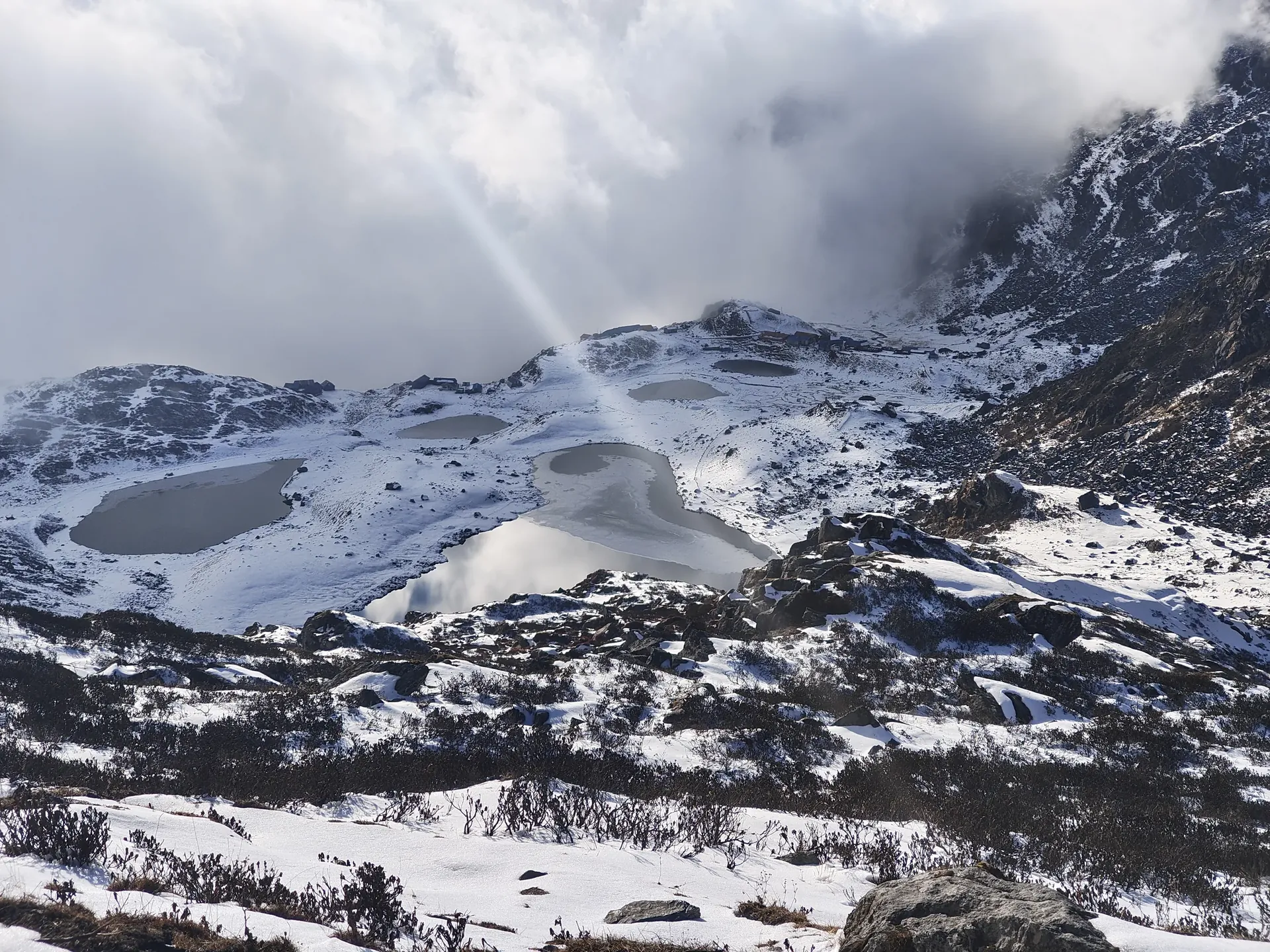
The Panch Pokhari Trek leads to one of Nepal's most genuinely under-visited high-altitude destinations: a set of five sacred glacial lakes, collectively known as Panch Pokhari ('Five Lakes'), sitting at 4,100m inside Langtang National Park in Sindhupalchok district. Sacred to both Hindu and Buddhist pilgrims, and associated with the indigenous Bombo shamanic tradition, the lakes draw devotees each August during the Janai Purnima festival, when bathing in the holy waters is believed to cleanse sins.

This 9-day itinerary begins with a drive from Kathmandu to Chautara, the district headquarters of Sindhupalchok, then follows a quiet ridge trail north through Tamang farming villages, oak and rhododendron forest, and high pasture before reaching the lakes themselves at the base of the Jugal Himal range. Because there are no teahouses for most of the route, this is a fully-supported camping trek, with a dedicated cook and kitchen crew accompanying every group.

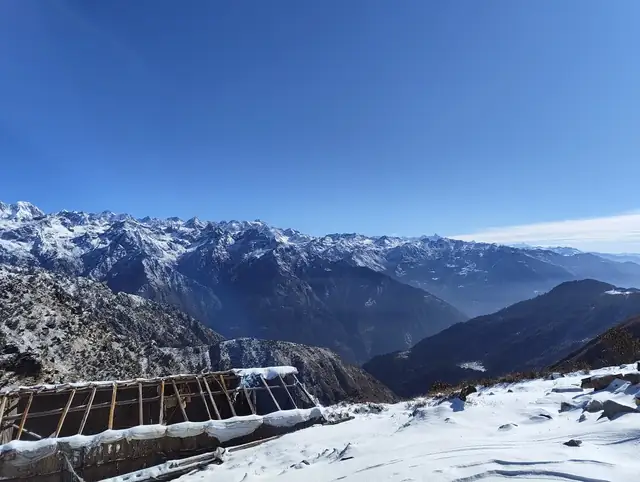
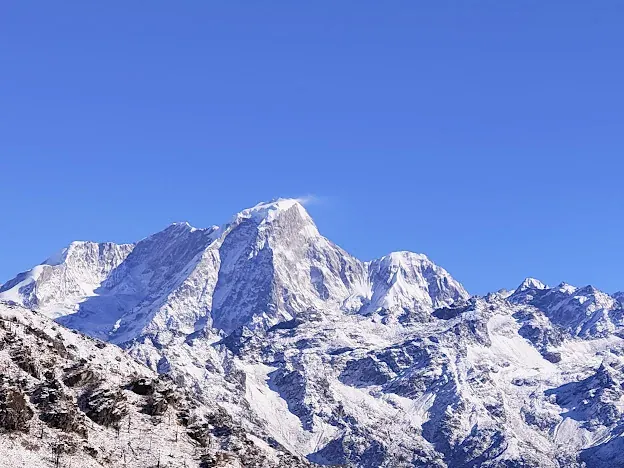
Trekkers are rewarded with close views of Dorje Lakpa (6,966m), Phurbi Chhyachu (6,637m), and Madiya (6,257m) from a short viewpoint above the lakes at 4,300m, along with a genuine sense of solitude that's increasingly rare on Nepal's more established short treks. This 9-day pace allows for steadier acclimatisation than a compressed itinerary, while still returning to Kathmandu within a single week and a half.

Highlights of This Trek

  • Trek to the sacred Panch Pokhari ('Five Lakes'), one of Nepal's least-visited high-altitude pilgrimage sites.
  • Close views of the Jugal Himal range — Dorje Lakpa, Phurbi Chhyachu, and Madiya — from the 4,300m viewpoint above the lakes.
  • Experience authentic Tamang farming villages and culture largely untouched by mainstream trekking tourism.
  • Trek through Langtang National Park's forested mid-hills, rich in oak, rhododendron, and pine.
  • Fully-supported camping experience with a dedicated cook, kitchen crew, and porters — no teahouse infrastructure required.
  • A moderate, achievable trek for fit beginners, with a steadier 9-day pace than the more demanding 7-day compressed version.
Why Choose the 9-Day Panch Pokhari Trek?

Most operators schedule Panch Pokhari over 12 to 16 days as a one-way traverse continuing through Helambu to Melamchi or Sundarijal. This 9-day itinerary instead follows a there-and-back route via Chautara, giving you the lakes, the Jugal Himal viewpoint, and a steadier acclimatisation pace, while keeping the total trip length practical for trekkers with roughly a week and a half available.

What sets this trek apart is the absence of crowds. Where Langtang Valley, Helambu, and Everest Base Camp all see a steady flow of trekkers throughout the season, Panch Pokhari remains a trail you are likely to have almost entirely to yourself outside of the August pilgrimage period. This is trekking in Nepal as it existed before the major routes became established — quiet ridgelines, simple camps, and a genuine sense of discovery.

The 9-day pace also allows your body more time to adjust to altitude than a faster itinerary would, reducing AMS risk on the push to 4,100–4,300m. Combined with a dedicated cook and full camping support, this is the most balanced way to experience Panch Pokhari without either the demanding pace of a compressed 7-day version or the extended length of the full 14-to-16-day Helambu traverse.

Highlights of Why Choose the 9-Day Panch Pokhari Trek?

  • A there-and-back route via Chautara, more time-efficient than the full Helambu traverse.
  • Far fewer trekkers than Langtang, Helambu, or Everest Base Camp — genuine solitude on the trail.
  • A steadier altitude gain profile than the compressed 7-day version, reducing AMS risk.
  • Directly support remote Tamang farming communities through camping-crew wages and trail use.

Fitness & Preparation

The Panch Pokhari Trek is graded moderate, with daily trekking of 4 to 7 hours on forested ridgeline trails, including some steep sections. No technical climbing or scrambling is required. The maximum altitude of 4,100m at the lakes (4,300m at the viewpoint) carries a real but manageable AMS risk, which this 9-day pace is specifically designed to reduce compared to faster itineraries.

We recommend starting a training routine 6-to-10 weeks before departure, combining cardiovascular exercise (hiking, jogging, cycling) with leg and core strength work. Practising with a loaded daypack helps condition your body for the steeper ridge sections between Kami Kharka and Hile Bhanjyang.

As of April 1, 2023, solo trekking is banned for foreign trekkers in Nepal's national parks and conservation areas, including Langtang National Park, which covers the Panch Pokhari route. All trekkers must be accompanied by a licensed guide. Given the lack of teahouse infrastructure and signage on this specific trail, a guide is also a practical necessity, not just a legal one.

Highlights of Fitness & Preparation

  • Start fitness training 6-10 weeks before departure with cardio, strength work, and loaded hikes.
  • Solo trekking banned since April 2023; a licensed guide is mandatory and practically essential on this route.
  • Pack a genuine 4-season sleeping bag rated to at least -15°C — every night above Chautara is spent camping.

Trek Highlights

Discover the unforgettable experiences that make this journey extraordinary

Panch Pokhari (4,100m)

Visit the five sacred glacial lakes
the largest being Surya Kunda
held sacred by both Hindu and Buddhist pilgrims and the indigenous Bombo tradition.

Jugal Himal Viewpoint (4,300m)

A short climb above the lakes delivers close panoramic views of Dorje Lakpa (6
966m)
Phurbi Chhyachu (6
637m)
and Madiya (6
257m).

Tamang Farming Villages

Trek through authentic
rarely-visited Tamang and Newar communities in the lower Sindhupalchok hills.

Langtang National Park Forests

Pass through dense oak
rhododendron
and pine forest on the climb from Chautara toward the high pastures.

Genuine Solitude

One of the least-visited high-altitude trails within reach of Kathmandu — expect to see very few
if any
other trekking groups.

Full Camping Support

A dedicated cook and kitchen crew accompany the trek throughout
since there are no teahouses for most of the route.

Cost Details

Transparent pricing with no hidden costs

Includes

  • Airport pick-up & drop-off (private vehicle)

  • 2 nights' twin-sharing accommodation in a 3-star Kathmandu hotel with breakfast

  • All ground transportation: Kathmandu to Chautara and Chautara to Kathmandu by private jeep

  • All necessary permits: Langtang National Park Entry Permit and TIMS Card

  • Licensed English-speaking trekking guide experienced on the Panch Pokhari route

  • Dedicated cook and kitchen crew for the full duration of the camping trek

  • Porter service (1 porter for every 2 trekkers, max 20–25kg load)

  • Guide, cook, and porter wages, meals, accommodation, equipment, and insurance

  • Full camping equipment during the trek: tents, foam mattresses, dining tent, kitchen tent

  • Three meals a day (Breakfast, Lunch, and Dinner) during the trek, prepared fresh by the trek's kitchen crew

  • First-aid kit including a pulse oximeter for daily health checks

  • Farewell dinner in Kathmandu

  • All government taxes, VAT, and service charges

Full Value Package

Excludes

  • Nepal visa fee (to be obtained on arrival at TIA)

  • International airfare

  • Travel and medical insurance (mandatory, must cover high-altitude trekking up to 4,500m and emergency evacuation)

  • Lunch and dinner in Kathmandu (except farewell dinner)

  • Personal expenses: battery charging, alcoholic & non-alcoholic drinks, snacks, bottled water

  • Extra nights in Kathmandu due to early arrival, late departure, or any unforeseen delays

  • Tips for guide, cook, and porters (customary but not mandatory)

  • Personal trekking gear (e.g., sleeping bag, trekking poles, sleeping mat)

Additional services might be available upon request

Itinerary

9 days

Upon arrival at Tribhuvan International Airport, you will be met by our representative and transferred to your hotel in Thamel. After check-in, rest or explore the surrounding streets. In the evening, your guide will run a detailed trek briefing covering the route, permits, and camping arrangements, followed by a final gear check ahead of departure the next morning.

Accommodation

3-Star Hotel (Kathmandu)

Altitude

1,400m

Duration

Distance

Meals

Welcome drink

Location

Kathmandu

An early departure takes you northeast along the Araniko Highway through Dhulikhel and Dolalghat, tracing the Bhote Koshi and Sun Koshi rivers for much of the drive, with views of Gaurishankar and Dorje Lakpa appearing in places. After approximately 5 hours, arrive in Chautara, the district headquarters of Sindhupalchok. Following lunch, a short 2-to-3-hour walk brings you to Syaule (also known as Sim Bhanjyang) for your first night under canvas.

Accommodation

Camping (Syaule)

Altitude

1,500m

Duration

5 hrs (drive), 2–3 hrs (trek)

Distance

~120 km (drive), ~6 km (trek)

Meals

Breakfast, Lunch, Dinner

Location

Syaule

The trail climbs steadily through small Tamang and Newar farming villages and terraced fields, where potato is the dominant cash crop at this elevation, before entering forest dominated by oak and rhododendron. The climb to Kami Kharka, a cattle-grazing pasture, marks the first real sense of leaving settled farmland behind for the wilder country ahead.

Accommodation

Camping (Kami Kharka)

Altitude

2,300m

Duration

5–6 hrs

Distance

~10 km

Meals

Breakfast, Lunch, Dinner

Location

Kami Kharka

A longer, more demanding day as the trail climbs through forested ridgelines toward high pasture. Pauwa Bas, roughly midway, has a simple shelter used by pilgrims heading to Panch Pokhari, and the trail beyond opens into rolling, sparsely forested ridges with growing views of the Jugal Himal range. Camp at Hile Bhanjyang, now well above the treeline.

Accommodation

Camping (Hile Bhanjyang)

Altitude

3,700m

Duration

6–7 hrs

Distance

~12 km

Meals

Breakfast, Lunch, Dinner

Location

Hile Bhanjyang

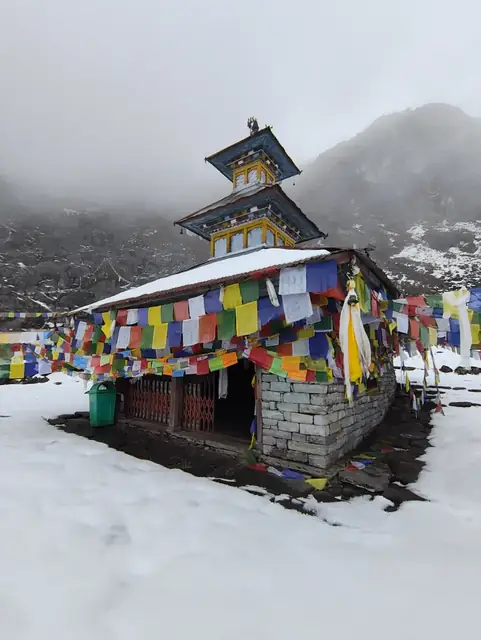
The route climbs over a ridge near Nasimpati (around 3,800m) before a final ascent through rocky alpine terrain to Panch Pokhari itself. Arriving at the lakes — five glacial ponds in a high, austere basin, with Surya Kunda the largest — is the trek's centrepiece. A small temple and a pair of pilgrim rest-houses sit beside the water. After settling into camp, those with energy remaining can continue a further 30-to-45 minutes above the lakes to the 4,300m Jugal Himal viewpoint, weather permitting.

Accommodation

Camping (Panch Pokhari)

Altitude

4,100m (4,300m at viewpoint)

Duration

4–5 hrs

Distance

~8 km

Meals

Breakfast, Lunch, Dinner

Location

Panch Pokhari

A full day to properly explore the lakes and surrounding area, with no further altitude gain required, making this an ideal acclimatisation and rest day. Visit the lakeside temple, walk the shoreline of Surya Kunda, and make the short climb to the 4,300m viewpoint for a full panorama of the Jugal Himal range, including Dorje Lakpa, Phurbi Chhyachu, and Madiya. This is the trek's best opportunity for photography, with the lake reflections at their calmest in the early morning light.

Accommodation

Camping (Panch Pokhari)

Altitude

4,300m (Jugal Himal viewpoint)

Duration

2–3 hrs (viewpoint hike)

Distance

~3 km

Meals

Breakfast, Lunch, Dinner

Location

Jugal Himal Viewpoint

With the lakes and viewpoint behind you, the trek reverses direction. A morning departure from camp, ideally with one last look at the lakes and mountains in early light, leads back down through Nasimpati and into alpine forest toward Hile Bhanjyang. The descent is faster than the climb up, but still a full trekking day.

Accommodation

Camping (Hile Bhanjyang)

Altitude

3,700m

Duration

5–6 hrs

Distance

~9 km

Meals

Breakfast, Lunch, Dinner

Location

Hile Bhanjyang

A long descending day retracing the route through Kami Kharka and back into terraced farmland. On reaching Syaule, continue a short final stretch to Chautara, where private transport meets the group for the drive back to Kathmandu along the Araniko Highway. Arrive in Kathmandu by evening. In the evening, gather for a farewell dinner to celebrate the completed trek.

Accommodation

3-Star Hotel (Kathmandu)

Altitude

1,400m

Duration

7–8 hrs (trek + drive combined)

Distance

~16 km (trek), ~120 km (drive)

Meals

Breakfast, Lunch, Farewell Dinner

Location

Kathmandu

Your Panch Pokhari adventure concludes today. Our team will transfer you to Tribhuvan International Airport for your onward flight. You'll leave Nepal with memories of a sacred, remote corner of the Himalaya that few trekkers ever see. If your flight is later in the day, additional activities or a day room can be arranged.

Accommodation

Altitude

1,400m

Duration

Distance

Meals

Breakfast

Location

Tribhuvan International Airport

Frequently Asked Questions

Find answers grouped by topic for your convenience.

Additional Info

Accommodation Standard

In Kathmandu, you will stay in a comfortable 3-star hotel in the Thamel district with breakfast included.

During the trek, accommodation is full camping: sleeping tents with foam mattresses, a dedicated dining tent, and a kitchen tent staffed by your cook and kitchen crew. This setup is necessary because there are no teahouses for most of the route between Chautara and Panch Pokhari, aside from a couple of basic pilgrim shelters near the lakes themselves. Toilet tents are provided at each camp.

  • A 4-season sleeping bag rated to at least -15°C is essential — nights at 3,700-4,100m in a tent are colder than an equivalent teahouse room.
  • Bring a sleeping mat or pad for additional insulation if your operator does not provide one.
  • There is no electricity above Chautara — bring a fully charged power bank.

Meals on the Trek

All main meals (Breakfast, Lunch, and Dinner) are included during the trek, prepared fresh by your dedicated cook and kitchen crew using ingredients carried in or sourced from villages along the lower route. The menu is necessarily more limited than a teahouse trek's, but built around hearty, energy-dense staples: dal bhat, noodle soups, simple pasta, porridge, and eggs.

Because there are no shops above Chautara, bring any personal snack preferences with you from Kathmandu rather than expecting to buy them en route.

  • Carry water purification tablets or a filter — your kitchen crew treats cooking and drinking water, but personal top-ups between meals are your responsibility.
  • Bring your own high-energy snacks (bars, nuts, dried fruit) from Kathmandu.

Permits Required

We arrange all necessary permits for you, included in the cost. Panch Pokhari requires two permits, the same as the Langtang Valley Trek since both lie within Langtang National Park:

1. Langtang National Park Entry Permit: NPR 3,000 plus 13% VAT (approx. NPR 3,390 / USD 27 per person). Checked at the park entry point near Chautara.

2. TIMS Card (Trekkers' Information Management System): NPR 1,000–2,000 per person, arranged through your licensed trekking agency.

Note: As of April 1, 2023, solo trekking is banned for foreign trekkers, and TIMS cards are now issued only through registered agencies alongside a licensed guide.

  • Bring 2-3 passport-sized photos and a copy of your passport for permit applications.
  • Carry some cash in Nepali Rupees for any small purchases in Chautara before departure.

Packing List (Essentials)

Clothing: Thermal base layers (merino wool recommended), trekking shirts, a fleece jacket, a warm insulated down jacket, a waterproof and windproof hardshell jacket and trousers, trekking pants, a warm beanie hat, a sun hat, gloves (lightweight and insulated pairs), and multiple pairs of trekking socks.

Footwear: Well broken-in, sturdy waterproof trekking boots with good ankle support. Camp shoes or sandals for evenings.

Gear: 50-65L duffel bag for your porter, 20-30L daypack, a 4-season sleeping bag rated to -15°C or lower, a sleeping mat, trekking poles, a headlamp with spare batteries, UV-protected sunglasses, water bottles or a hydration bladder (2L capacity), water purification tablets or a filter.

Toiletries & Health: Sunscreen (high SPF), lip balm with SPF, hand sanitiser, biodegradable wet wipes, and a personal first-aid kit including blister care, pain relief, and any altitude medication discussed with your doctor in advance.

Extras: A high-capacity power bank (there is no electricity above Chautara), a camera, and cash in Nepali Rupees.

  • Pack light — your main duffel bag for the porter should not exceed 10-12 kg.
  • Use dry bags or heavy-duty zip-lock bags to keep gear organised and dry inside the duffel.
  • Carry your valuables (passport, cash, camera) in your daypack at all times.

Weather & Best Time to Trek

Spring (March to May): Mild temperatures at lower elevations with blooming rhododendrons along the Syaule-to-Kami Kharka stretch. Early March can still carry residual snow on the higher ridges near Hile Bhanjyang and Nasimpati.

Autumn (September to November): The most reliable season, with crystal-clear post-monsoon skies and the best visibility of the Jugal Himal range. Nights are cold at altitude but daytime trekking conditions are excellent.

August (Janai Purnima): A culturally significant time to visit, coinciding with the Hindu and Buddhist pilgrimage festival at the lakes, but this falls within monsoon season, with wetter trails, leeches at lower elevations, and increased landslide risk on the approach road.

Winter (December to February): Possible for experienced, well-equipped groups, but expect serious cold at altitude and a real risk of snow blocking the final approach to the lakes.

  • Because most of the route above Kami Kharka is exposed ridgeline with no shelter, weather conditions matter more on this trek than on teahouse-based routes.
  • Confirm seasonal trail conditions with your guide before departure, particularly for early spring or winter bookings.

Health & Wellness Tips

Acclimatisation is Key: Walk slowly ('bistari, bistari'), ascend gradually, and drink plenty of fluids. This 9-day itinerary builds in a full rest and exploration day at Panch Pokhari before any further altitude gain.

Hydration: Drink 3-4 litres of water or warm fluids per day. Proper hydration is one of the most effective ways to reduce AMS risk.

Nutrition: Eat well, even if your appetite drops at altitude. Carbohydrate-heavy meals like dal bhat provide the sustained energy long trekking days require.

Communication: Be completely honest with your guide about any symptoms. Any headache, nausea, or dizziness should be reported immediately so it can be monitored.

Hygiene: Use hand sanitiser before meals. With a dedicated kitchen crew, food hygiene standards are generally good, but personal prevention still matters.

  • Avoid alcohol and tobacco during the trek.
  • Listen to your body — it is the most important indicator of your wellbeing at high altitude.

Media Gallery

4 photos from Panch Pokhari Trek – 9 Days

Gallery image 1
Gallery image 2
Loading...
Gallery image 3
Loading...
Gallery image 4

Panch Pokhari Trek Elevation Profile (9 Days)

A steady ascent via Chautara to the sacred lakes at 4,100m, with a dedicated rest day before a swift two-day descent.

Max Altitude
4,300m
Day 6
Total Ascent
2,900m
5 days
Total Descent
2,900m
2 days
Avg Altitude
2,644m
9 days
D1D2D3D4D5D64,300mPeakD7D8D91,000m1,500m2,000m2,500m3,000m3,500m4,000m4,500mTrek DaysElevation (meters)

Cost and Date

Start Dates refer to your arrival date in Nepal. End Dates correspond to your return date from Nepal.

The Panch Pokhari Trek – 9 Days set departure dates are tailored for the group joining option. If the departure dates don't fit your schedule, we can arrange alternative dates that better suit your needs.

Start Date
12 Sep 2026
End Date
21 Sep 2026
Guaranteed
Price from US$1,090
per person for groups

Trek Route Map

Kathmandu to Tribhuvan International Airport via 7 stops — free OpenStreetMap, no API key required.

  • Start: Arrival in Kathmandu (1,400m)
  • Stop: Drive Kathmandu to Chautara (1,450m), Trek to Syaule (1,500m)
  • Stop: Trek Syaule to Kami Kharka (2,300m)
  • Stop: Trek Kami Kharka to Hile Bhanjyang (3,700m)
  • Stop: Trek Hile Bhanjyang to Panch Pokhari (4,100m) via Nasimpati
  • Stop: Exploration Day at Panch Pokhari and Jugal Himal Viewpoint (4,300m)
  • Stop: Trek Panch Pokhari Back to Hile Bhanjyang
  • Stop: Trek Hile Bhanjyang to Syaule, Drive to Chautara, then Kathmandu
  • End: Final Departure from Kathmandu
Leaflet © OpenStreetMap contributors © CARTO

From

$1090.00